The Science behind Liminal Spaces

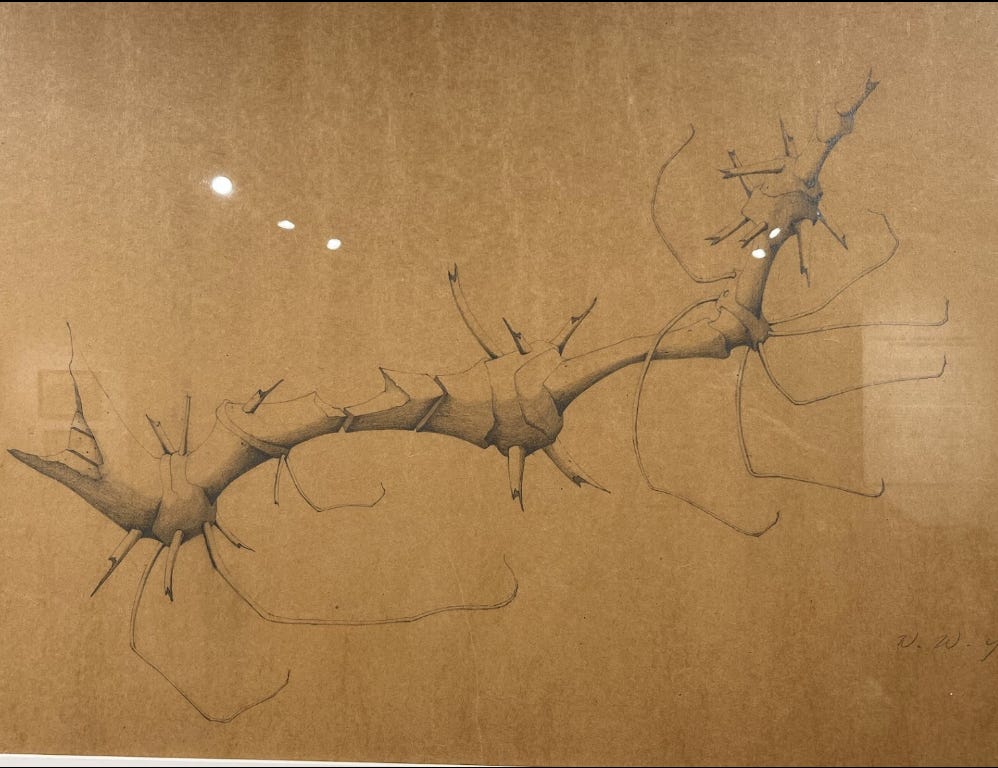
What emotions does the above image evoke in you?
Is it positive or negative?
Anxious or comfortable?
“[Willie Wayne Young’s] untitled pieces feature enigmatic objects — unrecognizable, but executed as carefully as medical illustrations — suspended in negative space, and all of them share a certain sort of clinical, sci-fi aspect. One drawing, of a segmented, horn-shaped form, might be a piece of armor worn by a futuristic warrior; another long-stemmed, geometric structure might be a space station on a distant planet. Still, other shapes, bearing long articulated tendrils, suggest protozoan life-forms seen under a microscope.”
— Sarah Gold Inside the Outside Exhibition for the New York Times
There are recognizable traces of real-world objects in Young’s work, but they have been altered in some way. While the pieces do not resemble anything specific, they preserve enough of a shared cultural image or experience for viewers to form an emotional connection and draw their own meaning from them.
For instance, most of my students describe the image above as feeling itchy or creepy.
Uncertainty in Structure
While a liminal space in the real world is simply a transitional area between locations, such as a hallway or mudroom, the term has evolved in pop-culture. It now refers more to environments that feel strangely suspended between states of being: empty malls, endless corridors, deserted schools, and other spaces that seem abandoned by their original purpose, and are now filled with some unknowing sentience or creations that lurk through the middle space.
Modern liminal spaces are clearly designed to serve a function, yet that function is no longer obvious. Clues remain, but they never fully explain what you’re looking at, creating a lingering sense of unease. These environments are often linked to horror because they evoke isolation, ambiguity, and the sense that the world around you is subtly wrong.
Structural Deviations
In order to create the liminal horror film Backrooms, set designers has to find an exact method to the madness. The study Structural Deviations Drive an Uncanny Valley of Physical Places (2022) provides insight into the specific features that can make a location specifically feel unsettling or distressing, depicted below:
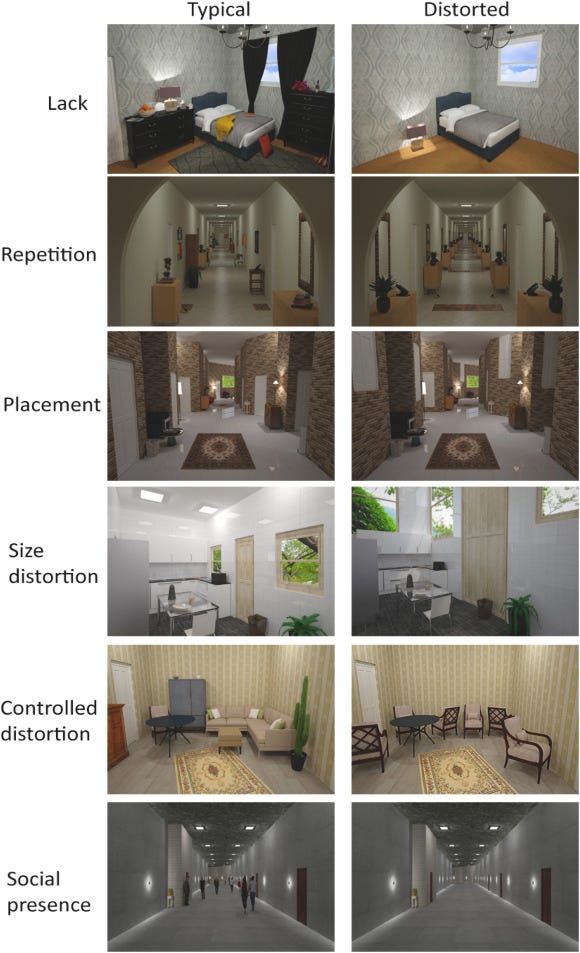
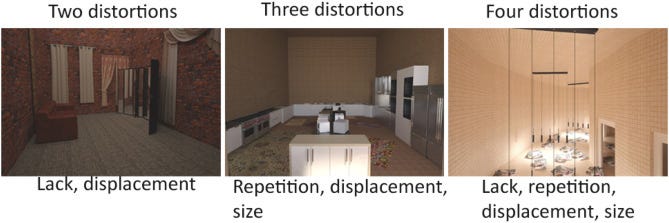
Familiar elements signal that a place was intentionally designed. However, when those elements are repeated excessively, placed where they do not belong, or altered in unexpected ways, they raise questions that the environment cannot answer. Why did someone, or something, choose to do that?
That unresolved tension can make a space feel disturbing or even threatening.
I’ve included some additional images and resources below from manga BLAME! that show this effect in a uniquely-dramatic hostile world:


Animosity in Design
The same variations of the uncanny familiar are utilized in Hollywood soundscapes for the same outcomes. In Hereditary, “Shepard tone, infrasound, subliminal and corporeal sounds, and the use of silence…enriches the film by building tension, enhancing dread, triggering fear and delivering unseen narrative information in a shorthand way” (Kattelman, 2022).
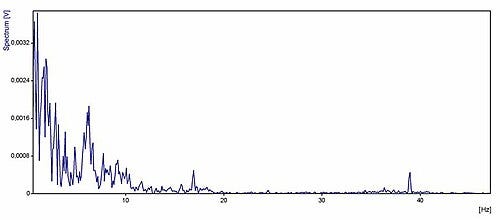
The term infrasound refers to acoustic waves below 20 Hz. These frequencies are generally inaudible to humans, but at high intensities they can still produce physical discomfort or unease.
Some Backrooms fiction has described spaces where sunlight has been misinterpreted as pigmented coloring on walls mixed with the sound of the sun itself rather than the photons originating from it.
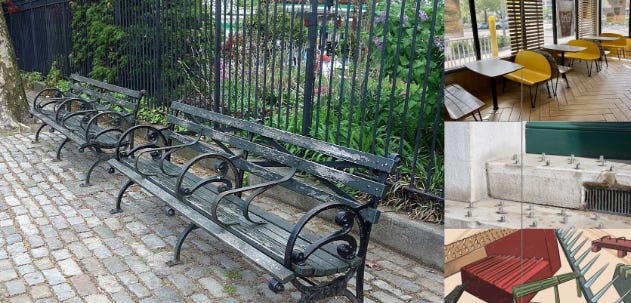
This sensory discomfort extends into real world functional design. Within the field of hostile architecture, everyday spaces are intentionally shaped to be less comfortable or less usable. Examples include benches with added armrests to prevent homeless people from sleeping, slanted seating in fast food restaurants to discourage lingering, and spikes placed on buildings to deter both wildlife and again, homeless people. Annoying sounds and specific colors and tight, squeezed spaces all keep these places intentionally hazardous.
Visions of Tomorrow
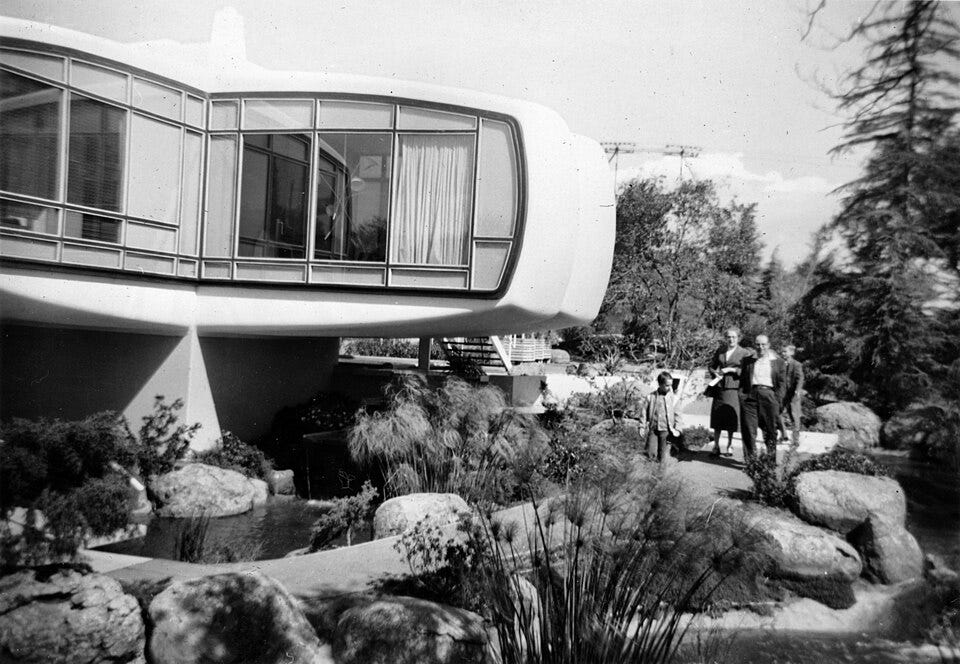
We do try to think optimistically with our sci-fi architecture on occasion. Monsanto’s Home of the Future in Disneyland, California tried to envision how new technology could influence our living conditions.
They had grand, futuristic ideas such as a microwave oven, an ultrasonic dishwasher with plastic dishes, ‘Cold Zones’ to replace refrigerators, dimmable lights, and… ring cameras!
Monsanto was of course also responsible for the scientific deception of cancer-causing chemicals in weed killers, killing millions with ‘agent orange’, copyrighting farm seeds, contaminating water in Anniston, Alabama, and other large-scale chemical contaminations.
The Home of the Future would provide great marketing for a company trying to keep a strong hold in our future. When designing architecture in speculative fiction, consider not only the physical form of a space, but also the systems, histories, and power structures that shape it.
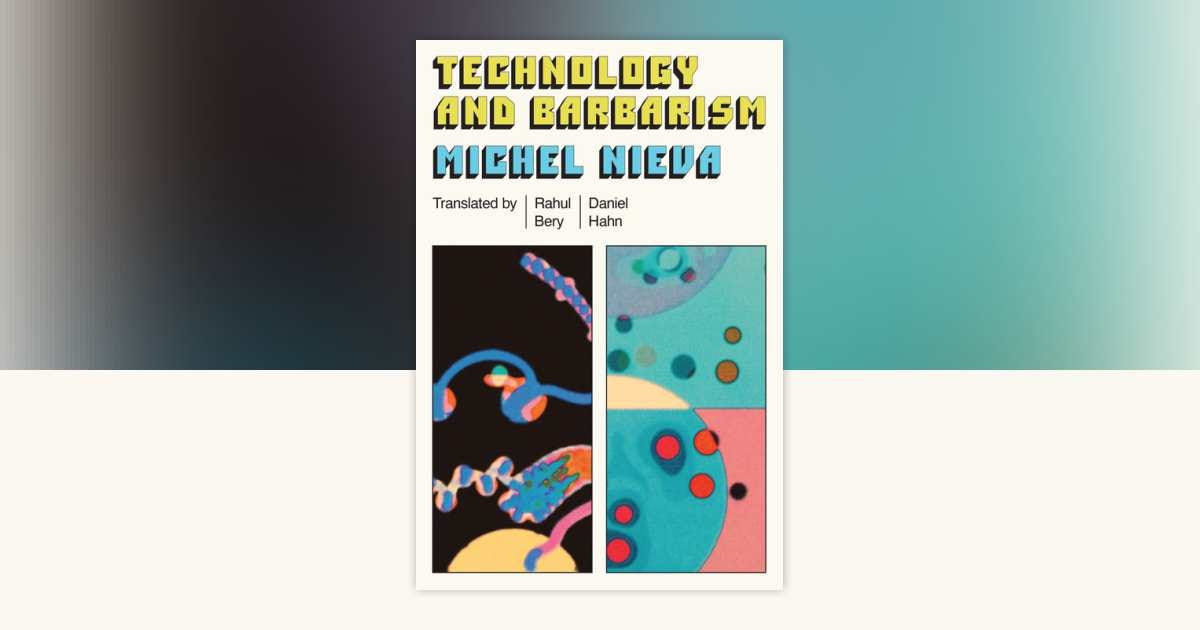
If you are interested in how science fiction warnings can be co-opted by corporations and billionaires as models for the future, I recommend Technology and Barbarism by Michel Nieva.
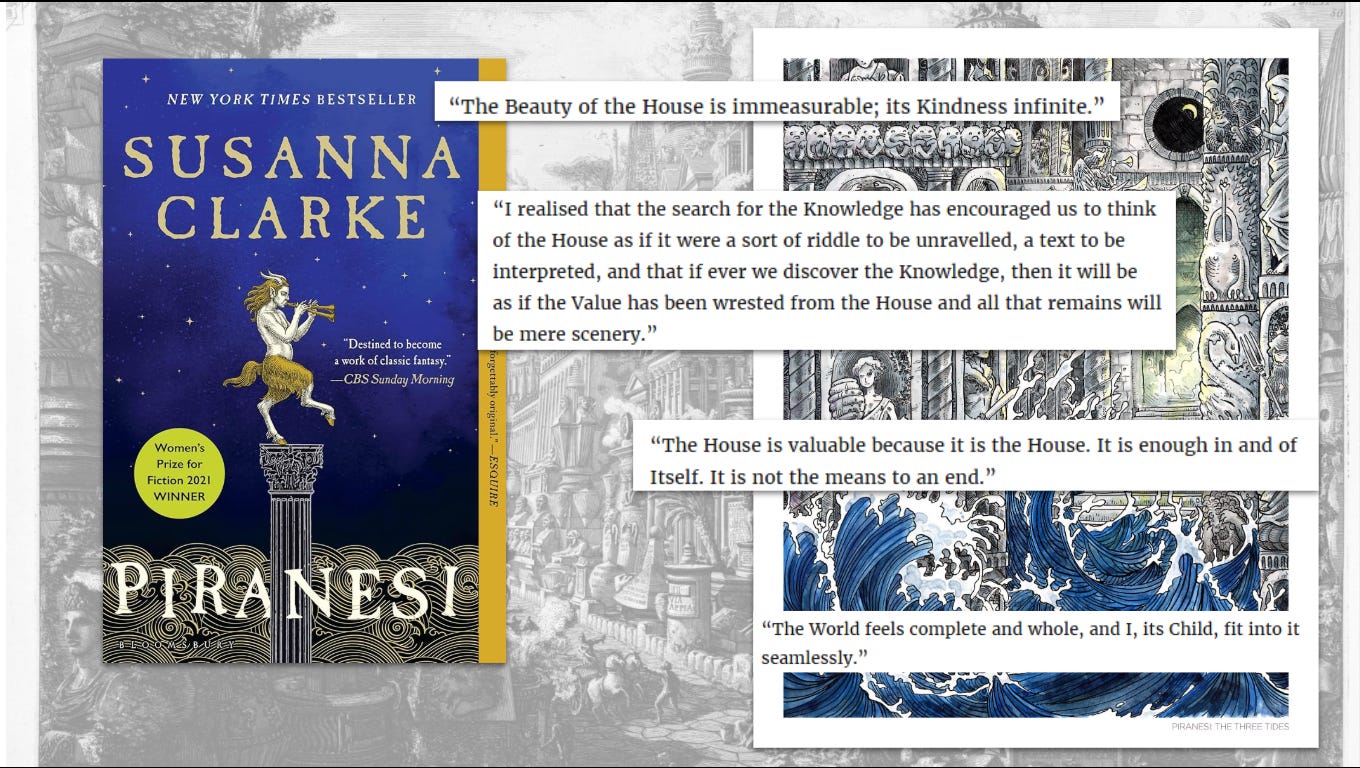
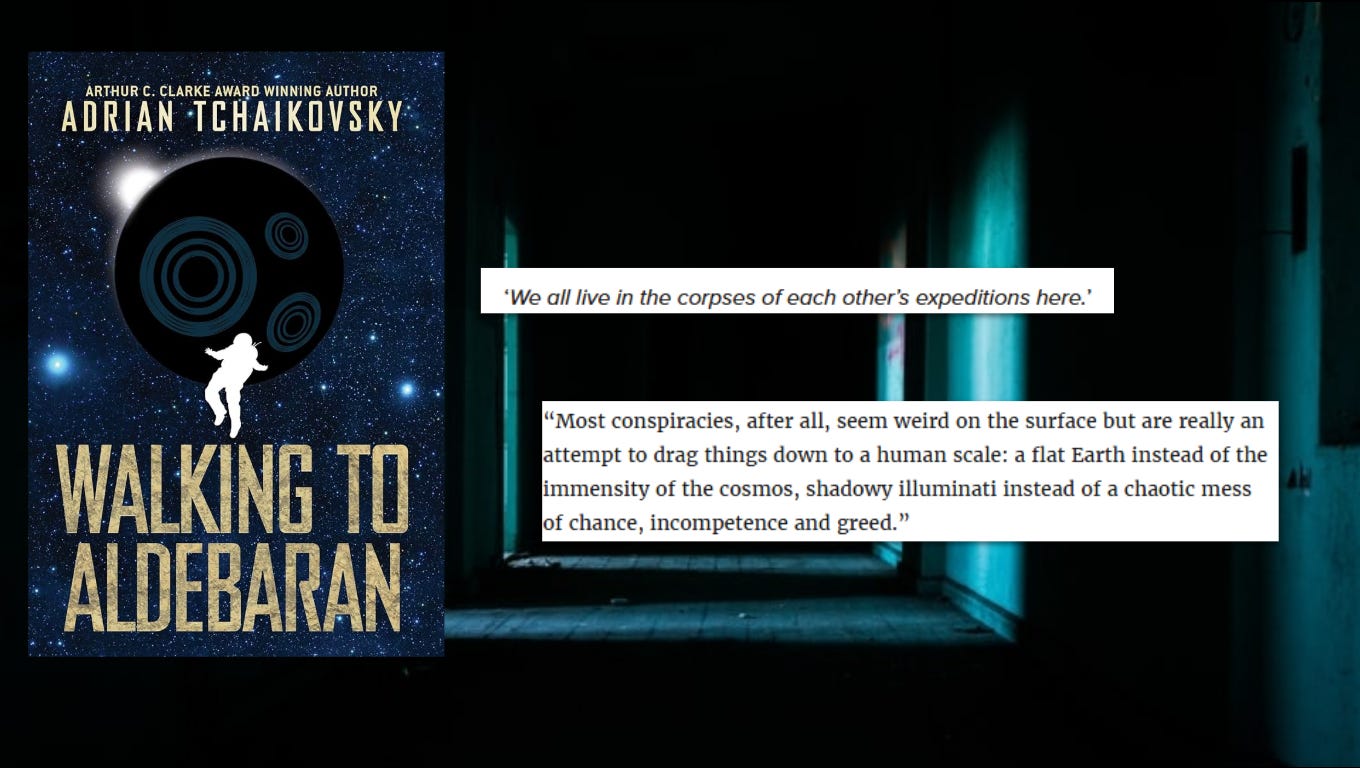
If you want even more recommendations, check out the quiet, cathedral-like wonder of Susanna Clarke’s Piranesi, or creeping, existential drift of Adrian Tchaikovsky’s Walking to Aldebaran. Both explore what it means to move through worlds that feel familiar, but never fully legible.
Takeaways
Liminal and uncanny spaces feel unsettling because they are recognizable, but never fully readable.
Small design distortions (repetition, emptiness, misplacement) can shift a space from normal to eerie.
Sensory cues like sound and atmosphere can amplify unease even when nothing is explicitly wrong.
At the core, these spaces work because they force us to search for meaning in places where meaning stays just out of reach.
For further science-fiction analysis, visit The Origins and Purpose of Science Fiction and Disabilities and Optimistic Futures