
Disabilities and Optimistic Futures (Part 1)
Fighting Modern-Day Eugenics in Science Fiction.

“Life Can Only Be Understood Backwards, But It Must Be Lived Forwards”
- Søren Kierkegaard
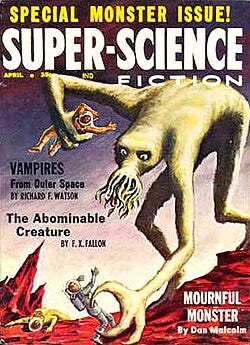
(~1800–1900) We believed in vampires.
The dead were found with blood in their mouths, and still our loved ones kept dying, even after the bodies were buried. We didn’t understand infection. We had no grand vantage point to identify Tuberculosis.
Before we knew about germs, we made monsters.
Even after the discovery of germs, older beliefs still held and hold sway. An old fashioned idea of the body’s terrain does have some relevance in “maintaining/restoring the anatomical/physiological cellular integrity”. This, however, is part of Germ-Terrain Theory, a modern hybrid. It notes that germs are real, but we should also be mindful about the physical spaces that cells hold and move through in our body.1 We even mimick shark scales to make cutting boards that are difficult for bacteria to traverse.
However, this hybrid is not the long-abandoned Terrain Theory popularized by Pierre Béchamp. Terrain theory rejected germs entirely in favor of a “stable” or “unstable” internal state.
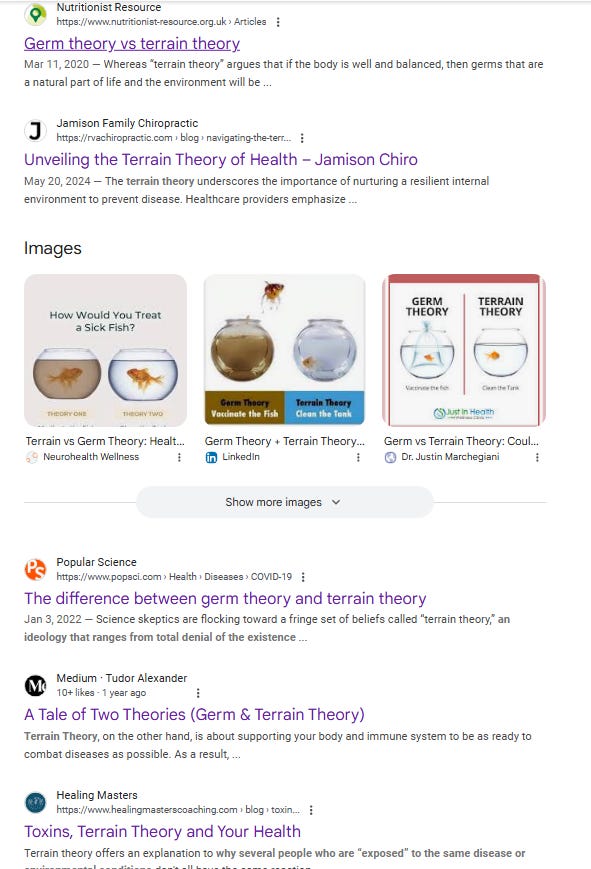
The current U.S. Secretary of Health and Human Services Robert F. Kennedy Jr. publicly supports Terrain Theory (the debunked, old-school variation) and holds firm anti-vaccination views. He misidentifies these terrain theory beliefs as “miasma theory,” an even older and also debunked explanation for disease (‘bad air’). On April 16, 2025, in a government that outwardly claims to be ‘accepting’ of autism, yet, in a long string of misinformation, he stated “These are kids who will never pay taxes”.
“We know how to live in a world without tuberculosis. But we choose not to live in that world.” - John Green, Everything is Tuberculosis
The current anti-vaccination movement in America largely stems from a misunderstanding of the COVID-19 vaccination strategies combined with a foundational falsehood in the early 2000’s that vaccines cause autism.2
A lack of scientific understanding on how disease and disease prevention works, then leads to a new monster. The viewpoint that children will be exposed to some environmental chemical, become autistic and will, to quote RFK Jr., “Destroy Families.”
I am autistic, I will not destroy your family, and I want to talk about why our written futures should include the disabled.
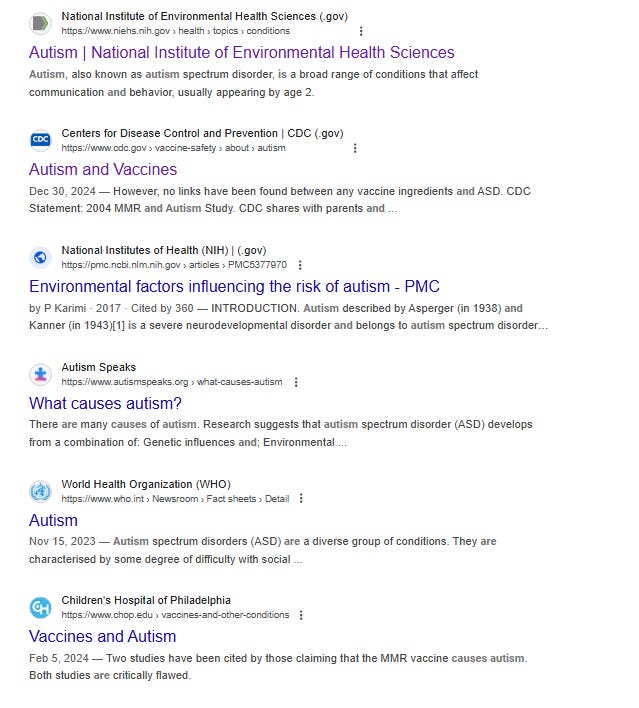
The current U.S. administration has publicly emphasized being ‘accepting’ of autism, while directing funding toward “finding the cause by September” (Update from the future: They chose Tylenol as the culprit) and dramatically cutting funding towards supporting the autistic community. Autism is a genetic condition—not something caused by “environmental toxins” and not something that can be ‘cured’. This has been repeatedly and conclusively confirmed by decades of scientific research. The cause is well known, and has been for a long time.
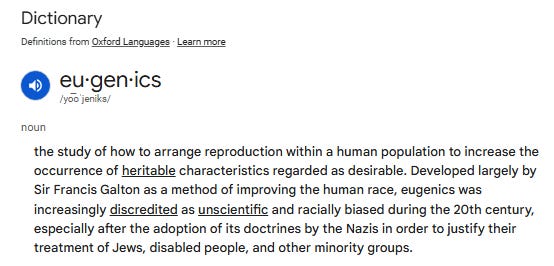
The amount of effort towards stopping autistic people from existing highlights modern ideologies of Eugenics.
“This attitude toward disabled people can even motivate everyday people to have sympathy toward the most heinous acts. For example, in 2016, the mother and godmother of Alex Spourdalakis, an autistic boy, were released from prison after admitting they killed him. The judge showed leniency and sentenced them to only the 3 years they had served during the trial because of the eugenic mindset that caring for Alex had supposedly been so burdensome that they had been driven to murder him. Such an outcome would be unthinkable if the murdered boy had been non-disabled.” - Disability and Philanthropy Forum
“Autism is a developmental disability that affects how we experience the world around us. Autistic people are an important part of the world. Autism is a normal part of life, and makes us who we are.
Autism has always existed. Autistic people are born autistic and we will be autistic our whole lives. Autism can be diagnosed by a doctor, but you can be autistic even if you don’t have a formal diagnosis. Because of myths about autism, it can be harder for autistic adults, autistic girls, and autistic people of color to get a diagnosis. But anyone can be autistic, regardless of race, gender, or age.
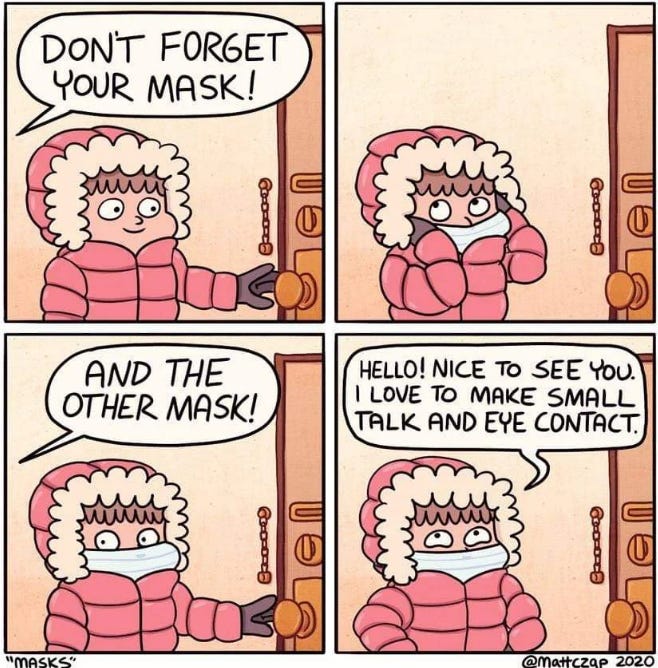
Autistic people are in every community, and we always have been. Autistic people are people of color. Autistic people are immigrants. Autistic people are a part of every religion, every income level, and every age group. Autistic people are women. Autistic people are queer, and autistic people are trans. Autistic people are often many of these things at once. The communities we are a part of and the ways we are treated shape what autism is like for us.
There is no one way to be autistic. Some autistic people can speak, and some autistic people need to communicate in other ways. Some autistic people also have intellectual disabilities, and some autistic people don’t. Some autistic people need a lot of help in their day-to-day lives, and some autistic people only need a little help. All of these people are autistic, because there is no right or wrong way to be autistic. All of us experience autism differently, but we all contribute to the world in meaningful ways. We all deserve understanding and acceptance.”
Read more at The Autistic Self Advocacy Network.
Viewing Disability
Working with a students that fit into a realm of physical and neurodiverse disabilities, they often enter the classroom for the first time apologizing to me ahead of time if they seem rude, because they are not trying to be. That breaks my heart.
As a society we have a tendency to blame the minority group for any disruptions they cause by not following social norms. It is not the problem of an individual to exist, it is the fault of the society for not itself existing to serve each human being to the means in which they need.
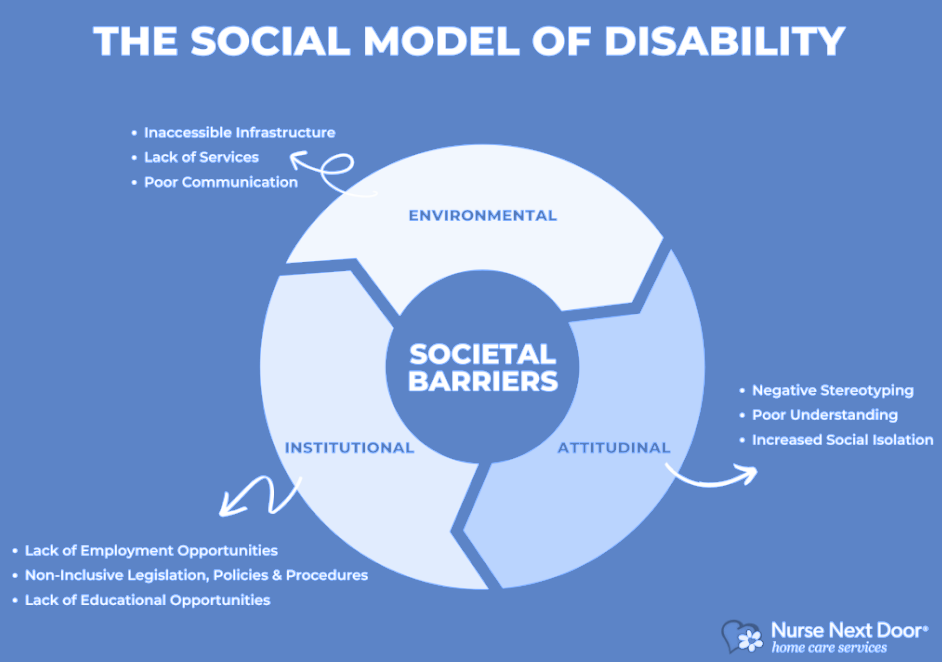
The Social Model of Disability views disability not as an individual's impairment, but as a result of societal barriers and attitudes that prevent full participation. For example, while blindness is a physical disability that impairs sight, people can also be overly supportive/cautious to the point of causing learned helplessness, leading to a social side of the disability. Listen to the story of Daniel Kish, who is blind and bikes.
The Individual Model of Disability views disability as a personal attribute or deficit residing within the individual. Some folks with autism may enjoy aspects of lateral thinking, focuses, and sensory experiences. Others may want to do without overstimulation and face blindness. It is up to them which parts of themselves they want to view as positive or negative. Having autonomy over your disability is pride.
“There is nothing wrong with us”, says the woman who can control weather to the woman who can’t touch someone without causing them to die.
Science Fiction
It is important to see ourselves in the future. It is punk to write against the overwhelming administration of hate and shame.3
Optimistic science fiction doesn’t pretend everything will be perfect or without problems. It gives us the ability to imagine that things can get better, and hold authority over who we want to become.
Sadness tends to make situational causes more likely, while anger makes human causes more likely.4 I am angry how things are going right now, but I do see the future being better. I see before us only a decade or two of people even being aware of neurological disorders and disabilities, which is a very small amount of time in human history. Even germ theory took several variations of discovery before it caught on.
As a superorganism I believe we as humanity will learn and improve.
Although Valerian and the City of a Thousand Planets may fall short in writing, acting, and anything beyond its worldbuilding and visuals, it still features my favorite opening scene in any film to this day.
My father grew up in New Jersey, and his dentist over in Russia. They were both told during their childhood that the other wants to kill them. That has yet to happen.
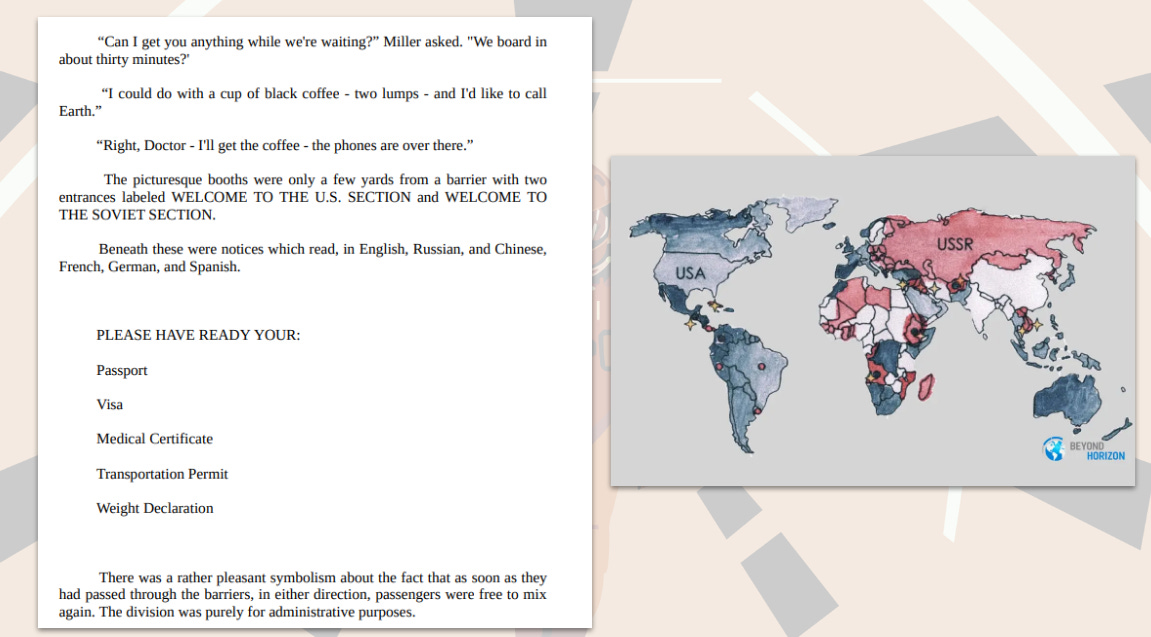
At the height of the Cold War, just a year before the moon landing, Arthur C. Clarke and Stanley Kubrick released 2001: A Space Odyssey as both a novel and a film. Before we encounter monoliths on the moon or mysterious signals from Jupiter, we’re shown something surprisingly ordinary: space travel that looks like a trip through an airport. Flight attendants glide through zero gravity, meals come in tidy packages, and a pen floats gently through the cabin. The technology is advanced, but what’s striking is how mundane it all feels; how the extraordinary is made normal. In a story written during a time when the world was split in two, the only mention of national separation is “purely for administrative purposes” at a passport checkpoint.
Quiet hope.
Now, we have established some modern issues of eugenics, and how science fiction can acknowledge our current issues while creating visions for growth for society over the individual. We can escape the current chains. For part two of this article, I plan on highlighting examples and strategies for integrating disabilities into sci-fi media, while discussing some of the science behind each topic and the power behind possibility.
Subscribe below and stay tuned.
Disabilities and Optimistic Futures (Part 2)
“Nothing is more punitive than to give a disease a meaning - that meaning being invariably a moralistic one.” ― Susan Sontag
Further Reading:


Nursing, C. P. C. O. J., & H. (2018). The Compromised, Pre-Diseased or Post-Diseased Terrain, Malaria and Germ Terrain Dualism. Crimson Publisher, LLC. https://doi.org/10.31031/COJNH.2018.04.000584
Knopf A. Time to remember: Vaccines don't cause autism. Brown Univ Child Adolesc Behav Let. 2021 Jul;37(7):9-10. doi: 10.1002/cbl.30559. Epub 2021 Jun 7. PMID: 40477518; PMCID: PMC8207024.
I’ll write more on this in the Solarpunk article
Keltner, D., Ellsworth, P. C., & Edwards, K. (1993). Beyond simple pessimism: effects of sadness and anger on social perception. Journal of personality and social psychology, 64(5), 740.